Home Treatments Malocclusion treatment
Malocclusion treatment
When the upper and lower teeth do not meet as they should
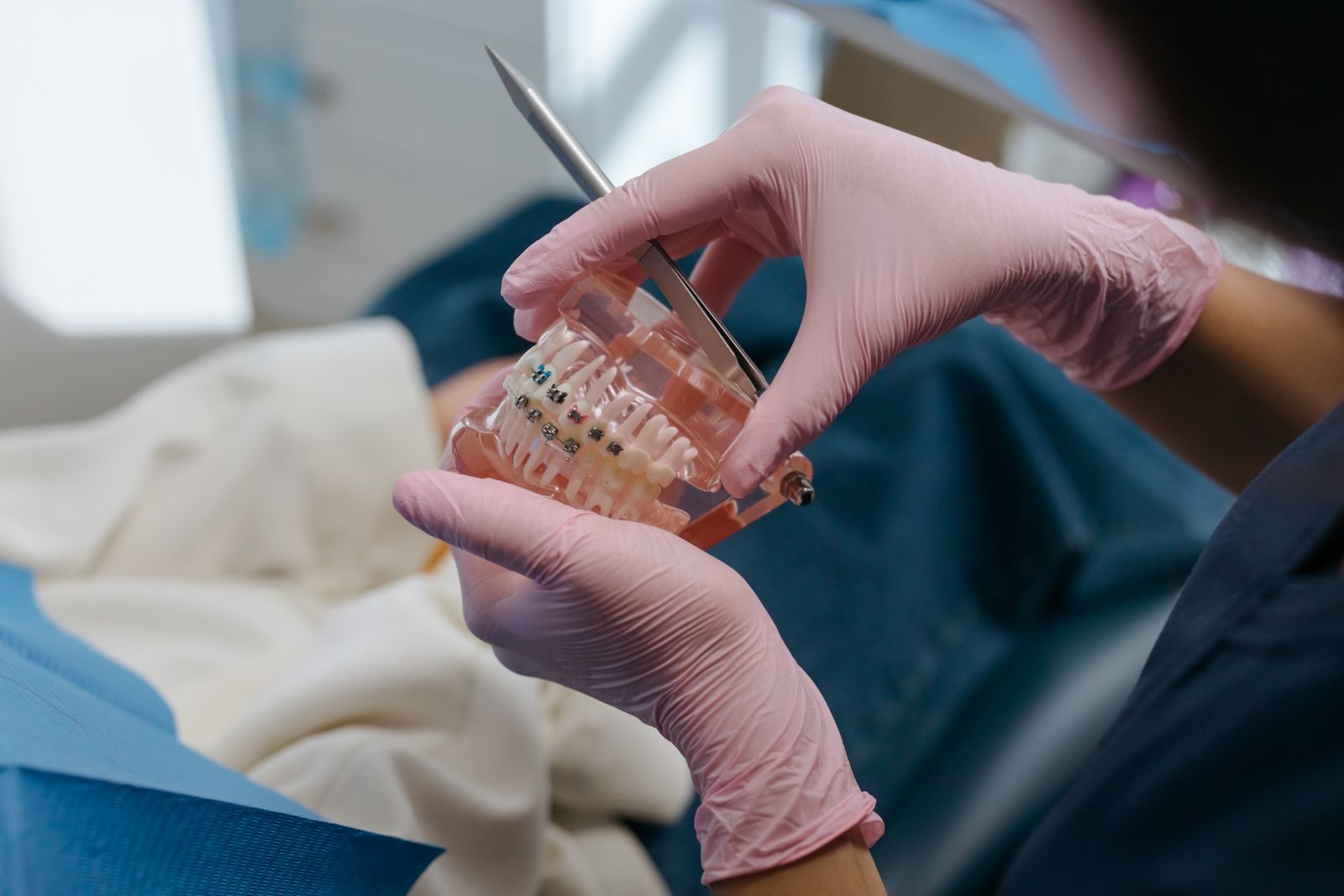
Malocclusion means the bite is off — teeth crowded, protruding, an open bite, a crossbite or an overbite. It is diagnosed and planned as a bite problem, then treated, usually with orthodontics.
What it is
Malocclusion is the diagnosis; orthodontics is usually the treatment. The distinction is worth making, because two people with crooked-looking teeth can have completely different problems — one has crowding in a normal-sized jaw relationship, the other has jaws that do not meet correctly and teeth that have tipped to compensate.
Classes of malocclusion describe how the back teeth meet. In a Class I bite the jaws relate normally and the issue is crowding or spacing. In Class II the lower jaw sits further back, giving the appearance of prominent upper teeth. In Class III the lower jaw sits forward. Alongside these there can be crossbites, open bites where the front teeth never meet, and deep bites where the uppers almost cover the lowers.
Some of this matters cosmetically and some of it matters functionally. Crowded teeth are harder to clean and collect more decay and gum disease. A crossbite can wear specific teeth quickly. An open bite makes biting into food difficult. A deep bite can traumatise the gum behind the upper front teeth.
Timing changes the options. While a child is still growing, the growth itself can be used — a crossbite corrected early, or the width of an upper jaw expanded — and this is far simpler than waiting. In adults the jaws no longer grow, so treatment moves teeth within the jaws, and severe skeletal discrepancies may need a joint plan with a surgeon.
You may need this if…
- Crowded, overlapping or rotated teeth
- Upper front teeth that protrude, or lower teeth that sit in front of the uppers
- Front teeth that do not meet when the back teeth are together
- Teeth that meet on the wrong side of each other when you bite
- Difficulty biting or chewing, or teeth wearing unevenly
- A child whose adult teeth are arriving badly out of line
What happens, step by step
Clinical assessment
How the teeth meet, how the jaws relate, the width of the arches, and how your lips and profile sit.
Records
Photographs, impressions or a scan for models, and X-rays — including a side view of the skull where the jaw relationship needs measuring.
Diagnosis
The type of malocclusion, whether it is dental or skeletal, and whether growth can be used.
Options, honestly
What each approach can and cannot achieve, how long it takes, and what happens if nothing is done — which is sometimes a reasonable choice.
Treatment
Usually orthodontics; in children sometimes a growth appliance first; in severe skeletal cases a combined plan with an oral surgeon.
Retention
Teeth move back towards where they came from. Retainers hold the result, and they are not optional.
Looking after it afterwards
- Cleaning matters more than usual while appliances are in place.
- Keep appointments — gaps in the schedule lengthen the whole treatment.
- Wear retainers exactly as instructed once teeth are straight.
- Report a broken bracket or wire promptly rather than waiting.
Questions people actually ask
Is this the same as orthodontics?
Malocclusion is the problem; orthodontics is the main way of treating it. The assessment decides which kind of malocclusion you have, which then decides the treatment.
What is the best age?
An orthodontic assessment at around seven or eight lets us see whether growth can be used. That does not mean braces at that age — often it means watching and starting at the right moment.
Can adults be treated?
Yes, and commonly are. The jaws no longer grow, so severe skeletal problems may need surgery, but teeth move at any age.
Does it have to be treated?
Not always. Mild crowding with healthy gums and no functional problem can reasonably be left. Treatment is more clearly worthwhile where cleaning is difficult, wear is happening, or function is affected.
This page is general information about malocclusion treatment. It is not advice about your own mouth — for that you need to be examined.
Related
People reading this also looked at
Want to talk it through first?
A consultation is a conversation and an examination. You leave with a written plan and a price, and no obligation to start.
Request an appointment